
Stop the Revenue Leak: 5 Executive Actions to Fix Provider Credentialing Delays

Picture this: It’s Tuesday morning. Your top physician just completed a complex procedure that will profoundly impact a local family. Clinically, it’s a massive win for your rural hospital.Financially? It’s a looming disaster.
Why? Because somewhere in the shuffle, a malpractice insurance certificate expired. Everyone in the building knows the provider renewed their policy. But the payor doesn’t care what you know. Without that updated piece of paper in hand, the claim is automatically denied.
Just like that, a critical revenue event turns into a total write-off. Your hospital isn’t just left waiting; you are now likely to not get paid at all for the procedure. You will lose that physician’s entire revenue stream every single day until the payor receives the updated malpractice certificate. Even worse, payors actively look for reasons to avoid paying claims and will frequently refuse to backdate effective coverage for the care provided during this gap.
This isn’t an isolated incident. Whether it’s a missing CAQH ID, a delayed PTAN, or an outdated Medicare enrollment, providers routinely view credentialing as an administrative annoyance. They prioritize patient care, as they should, but fail to realize that dragging their feet on paperwork directly jeopardizes the hospital’s ability to keep the lights on. They simply don’t see the connection between their missing signature and the hospital’s cash flow.
At DoorSpace, we built our software to fix this exact disconnect. We give providers their own individual logins, empowering them to easily track and organize their professional credentials across their entire career so they always have them handy. But while technology is the ultimate bridge, it cannot cross the gap without leadership. Software alone cannot override a lack of internal urgency.
Executive leadership must step in to protect the bottom line. Here are five actionable strategies rural hospitals and clinical staffing agencies can implement to eliminate credentialing bottlenecks.
1. Shift the Narrative: Show the Financial Impact
The Problem: Providers often view medical staff credentialing and payor enrollment as annoying HR paperwork. They fail to see how a missing document impacts their daily clinical work.
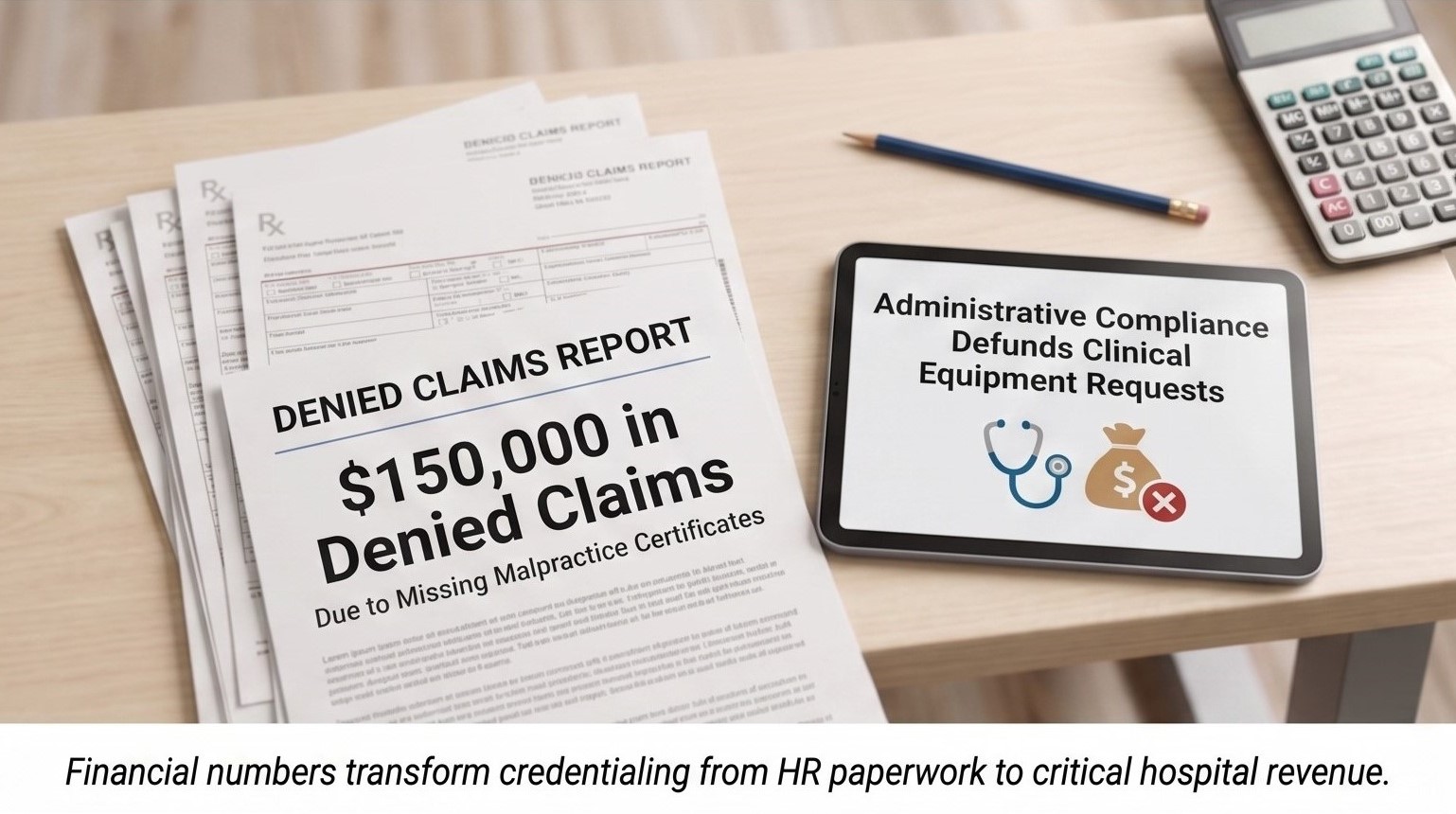
Executive Action: Practice Radical Financial Transparency
Hospital leadership must connect the dots between administrative compliance and hospital survival. Present actual financial numbers at medical staff meetings. Showing a slide that says the hospital experienced $150,000 in denied claims last month due to missing malpractice certificates completely changes the conversation. When providers ask for better equipment or more nursing support, clearly explain that delayed credentialing directly defunds those exact requests.
2. Implement “No Credential, No Schedule” Policies
The Problem: Rural hospitals routinely let providers start seeing patients or continue working while their privileging is pending or credentials have expired. This removes all urgency for the provider to comply.
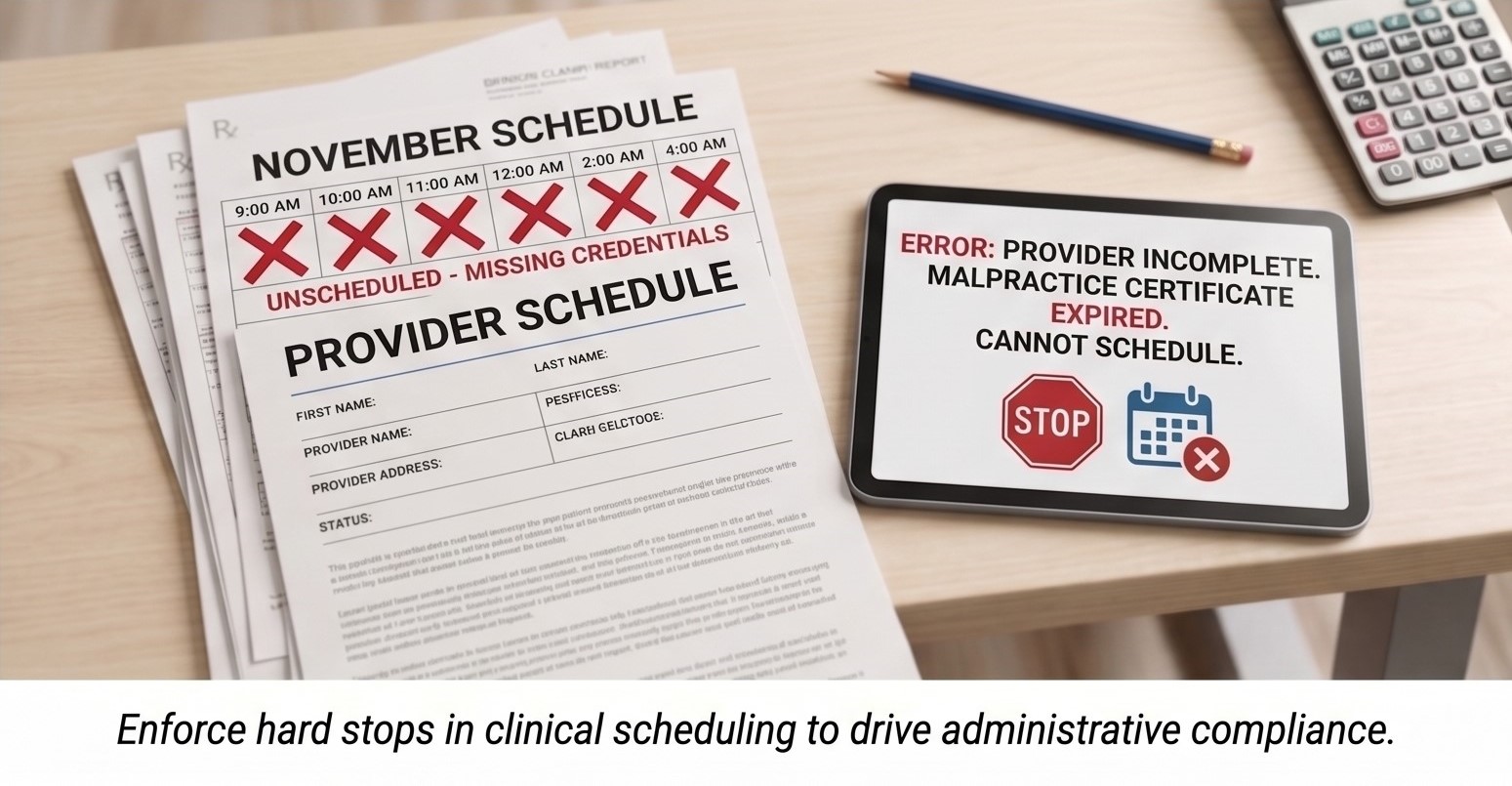
Executive Action: Establish Hard Stops on Clinical Scheduling
If a provider is missing core items like an updated malpractice certificate or a CAQH re-attestation, they cannot be put on the schedule until it is resolved. For contracted locum tenens providers, write strict clauses into their contracts. Mandate that medical directorship stipends or bonuses will be withheld until all credentialing documentation is verified.
3. Leverage Peer-to-Peer Accountability
The Problem: Doctors are notoriously resistant to administrative mandates from non-clinical staff. An email from the credentialing coordinator asking for a date of birth often goes ignored for weeks.
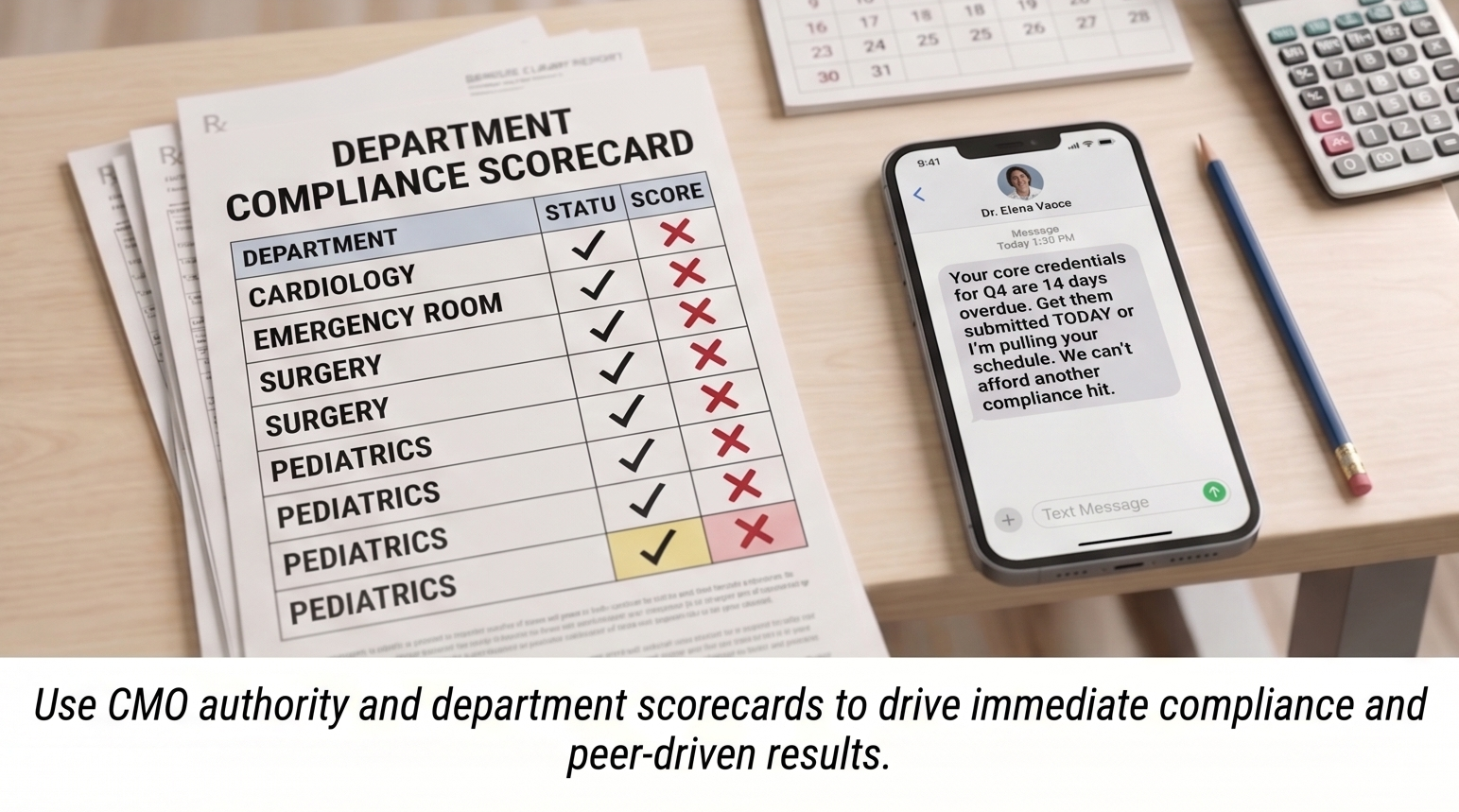
Executive Action: Appoint the CMO as the Credentialing Enforcer
Appoint your Chief Medical Officer or Medical Director as the credentialing champion. When an administrator’s email is ignored for three weeks, a direct text from the CMO demanding immediate action usually gets results in ten minutes. Additionally, create simple compliance scorecards for different departments. No clinical leader wants their specific department to be the reason the hospital is losing money.
4. Provide “Concierge-Level” Onboarding
The Problem: Providers are often expected to locate documents and update their files in their “free time” between treating patients. This almost guarantees the paperwork will be pushed to the bottom of their priority list.
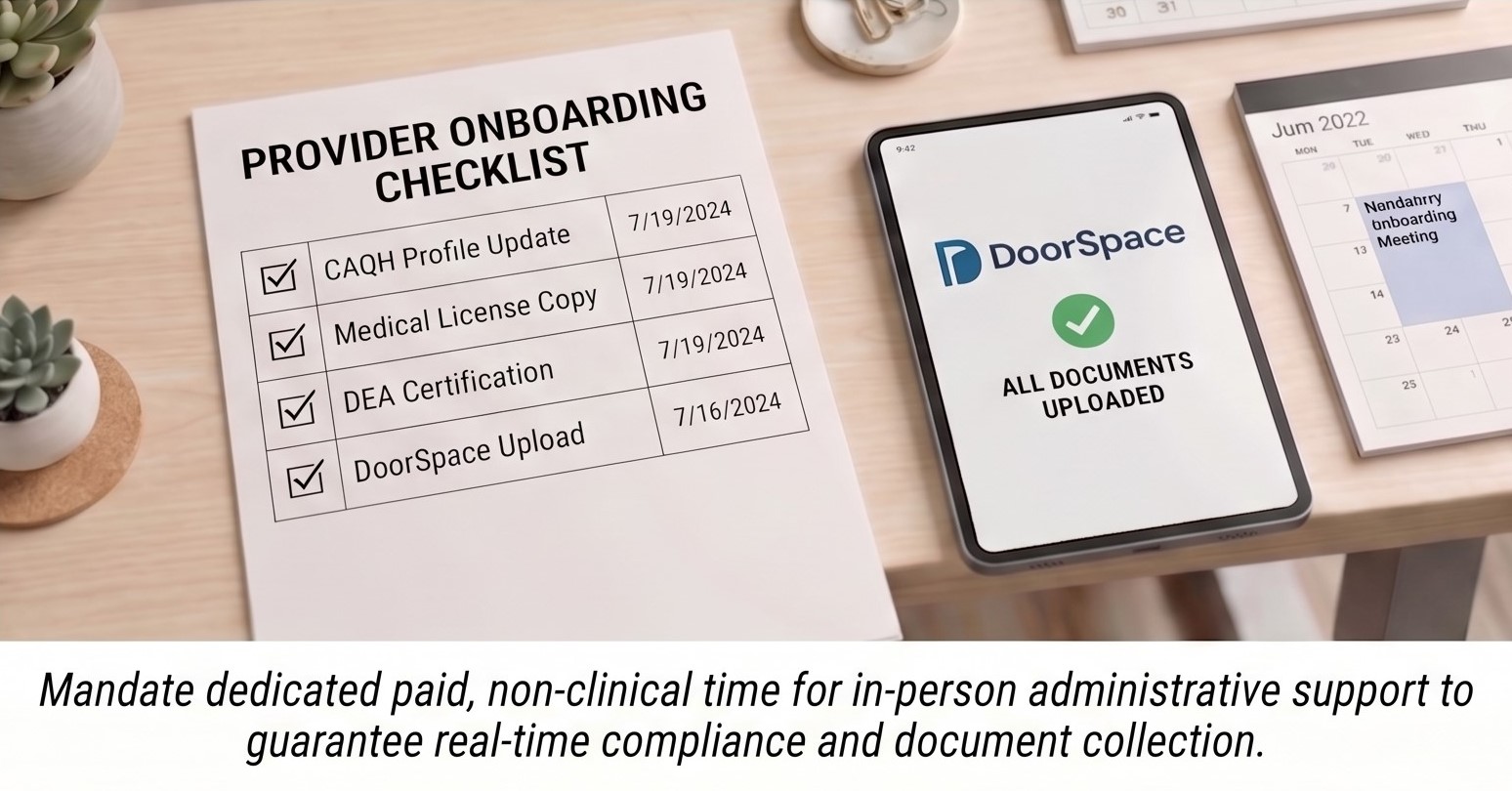
Executive Action: Dedicate Paid Non-Clinical Time for Compliance
Sometimes the most cost-effective solution is to sit down and do the work with them. Instead of emailing a list of 15 requested items, schedule a mandatory 30-minute meeting during the provider’s onboarding or annual review. During this meeting, an administrator physically sits with the provider, logs into CAQH, logs into DoorSpace, and helps them upload everything on the spot. Block out one hour of paid, non-clinical time specifically dedicated to this administrative compliance.
5. Automate the Escalation Matrix
The Problem: The credentialing team relies on manual sticky notes and spreadsheets to remember who to chase down. The burden of nagging falls heavily on frontline staff, leading to burnout and missed deadlines.
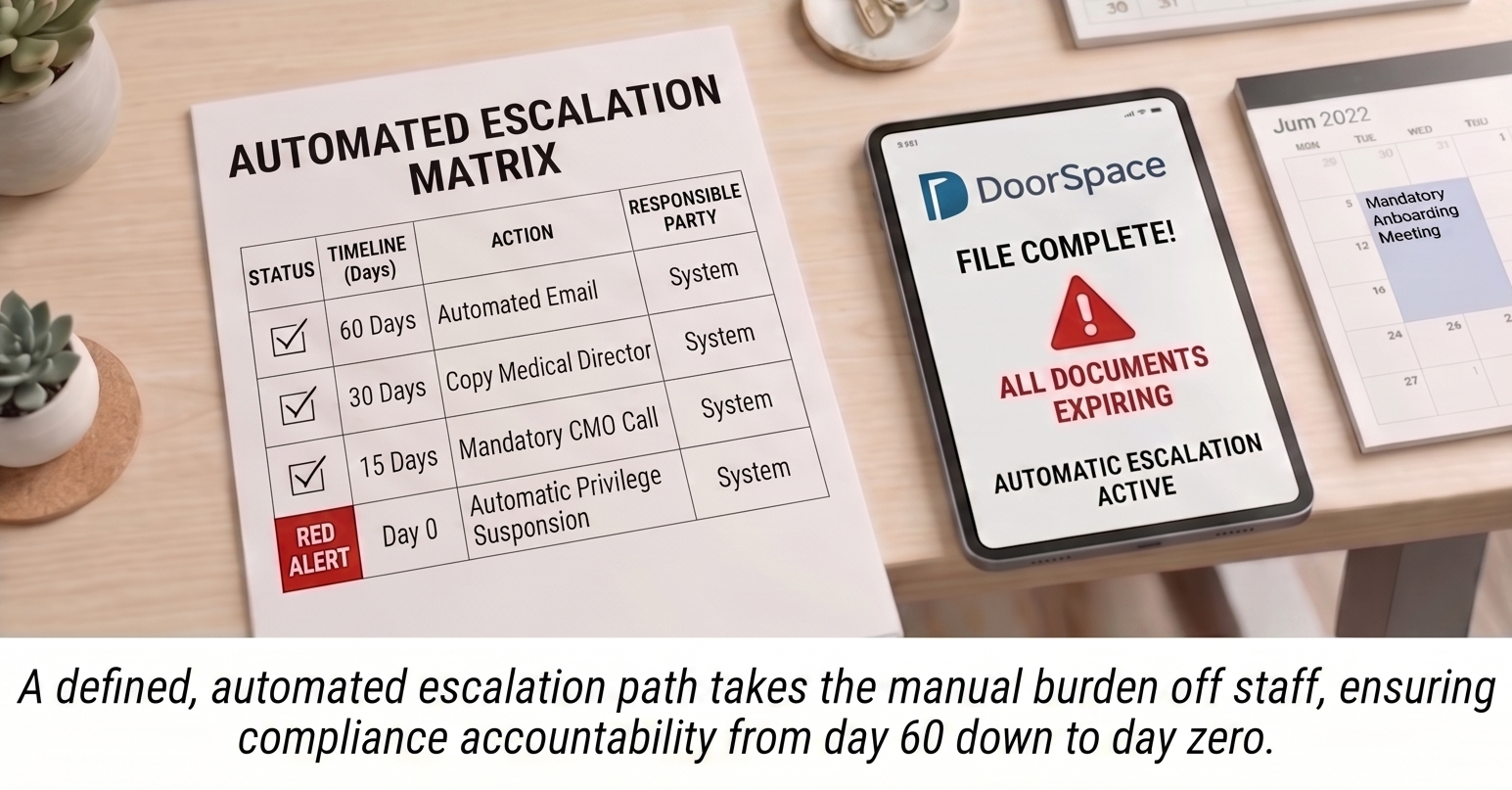
Executive Action: Implement a Strict, Automated Escalation Policy
Remove the manual burden from your team. Set your software to send an automated email to the provider at 60 days before expiration. At 30 days, trigger an email that copies the Medical Director. At 15 days, mandate a direct phone call from the CMO. At day zero, enact an automatic suspension of clinical privileges until the file is complete.
By moving credentialing from a back-office chore to a front-line financial risk imperative, rural hospitals can stop revenue leaks before they start. Partnering clear executive policies with provider-centric software like DoorSpace ensures your facility gets paid for the critical care it provides.
Is your current credentialing process relying too heavily on manual tracking and individual memory?
Don’t leave your facility’s compliance to chance. Let’s discuss how to move your medical staff office from a clerical burden to a strategic, revenue-securing asset.
